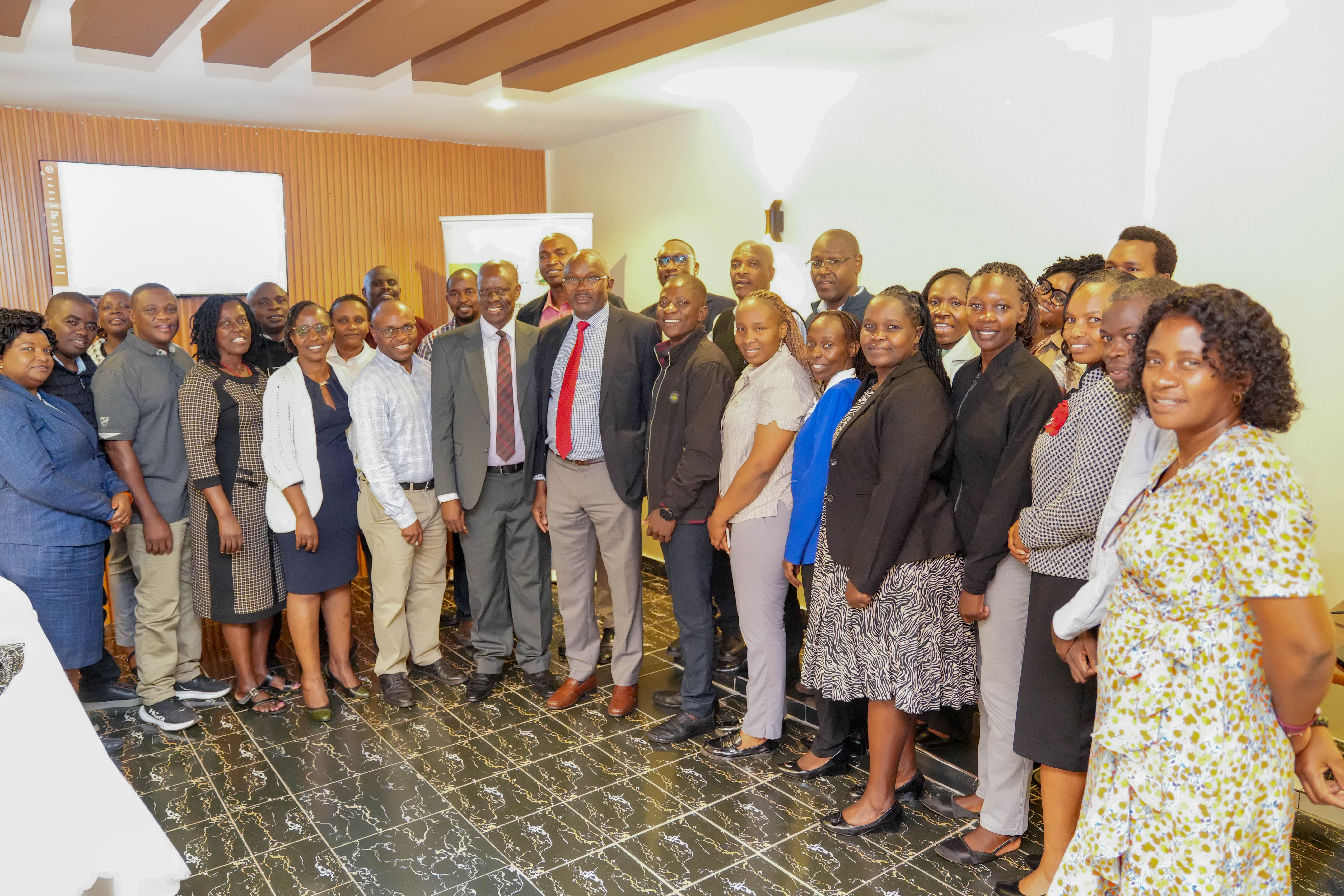
Academic Staff trained in Writing Policy Briefs from Research Evidence
Good news as 30 academic staff from University of Nairobi, Maseno and Embu Universities left with draft policy briefs after the Kenya Science Translation Hub successfully concluded a five-day Science Translation Training Programme that equipped them with practical skills to bridge the gap between research, policy and practice. Held from 27th to 31st July 2026 at the White Star Centre in Nairobi, the training focused on enabling researchers to translate scientific evidence into knowledge products that can inform policy decisions and contribute to food systems transformation.
Speaking during the Opening Ceremony, the Dean, Faculty of Agriculture, Prof. Moses Nyangito noted that, ‘Across many universities, groundbreaking research often remains within academic journals, limiting its influence on public policy and societal development. While researchers generate valuable evidence, policymakers require clear, concise and actionable information to make informed decisions.’
Recognizing this gap, the Kenya Science Translation Hub designed the training to strengthen the capacity of university researchers to communicate science in ways that influence policy and practice. The programme brought together experts in agriculture, communication, policy engagement and artificial intelligence to expose participants to the complete science translation process.
The workshop introduced participants to key concepts in agriculture and food security, opportunities for policy engagement in Kenya, agricultural policymaking processes and the critical role of evidence in informing policy. Participants also explored systematic reviews, the application of Artificial Intelligence in research, and practical approaches to communicating scientific findings to non-scientific audiences.
Through interactive discussions, group work, practical exercises and presentations, participants developed essential skills in writing policy briefs, presenting research findings effectively and packaging scientific evidence for decision-makers. Daily networking sessions further encouraged collaboration among researchers from the three universities, creating opportunities for future interdisciplinary partnerships.
The programme adopts a Theory of Change approach by investing in researchers' communication and policy engagement skills as the first step toward achieving broader societal impact.
With enhanced capacity, academic staff are expected to produce policy-relevant research outputs, engage more effectively with government and development partners, and contribute evidence that supports informed decision-making. Ultimately, this will increase the uptake of university research in shaping policies and practices that strengthen Kenya's food systems and improve livelihoods.
As the host institution, the University of Nairobi continues to demonstrate its leadership in advancing research excellence and knowledge exchange. By empowering researchers to communicate beyond academia, the University is reinforcing its commitment to ensuring that research generates tangible solutions to national and regional challenges.
The Science Translation Training Programme marks an important milestone in positioning universities as active contributors to evidence-informed policymaking. The knowledge, networks and practical skills gained by the participants will continue to influence research dissemination and strengthen collaboration between academia, government and other stakeholders long after the workshop concludes.
Through initiatives such as the Kenya Science Translation Hub, the University of Nairobi is not only producing knowledge but also ensuring that knowledge reaches the people and institutions capable of transforming it into meaningful change.